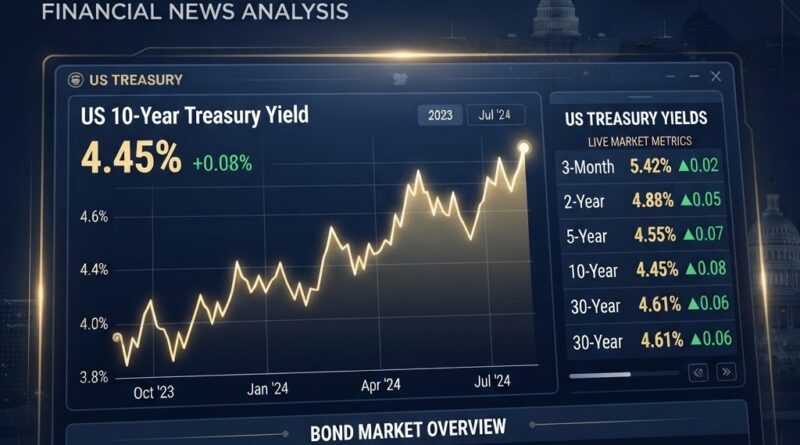
Treasuries Suffer Declines as 10-Year Yield Approaches Highest Level Since January 2025
The U.S. Treasury market is experiencing a notable downturn as yields on government bonds continue to rise, with the 10-year yield inching closer to its highest levels since January 2025. This shift in the bond market reflects ongoing economic dynamics and investor sentiment, which are closely monitored by both market participants and analysts.
As of the latest trading sessions, the yield on the 10-year Treasury note has surged, crossing significant thresholds that have raised alarm bells among investors. Analysts attribute this uptick in yields to a variety of factors, including inflation concerns, shifts in Federal Reserve monetary policy, and an overall reassessment of economic growth prospects.
With the Federal Reserve’s aggressive interest rate hikes over the past year, the central bank has aimed to combat inflation that has remained stubbornly high. However, the impact of these rate increases is now being felt in the bond market, where rising yields often indicate a decline in bond prices. The 10-year yield, often seen as a benchmark for various interest rates, has become a focal point for investors trying to gauge the direction of the economy.
The increase in the 10-year yield is significant as it tends to influence mortgage rates and other forms of credit, making it more expensive for consumers and businesses to borrow. This has raised concerns about a potential slowdown in economic activity, as higher borrowing costs can dampen spending and investment.
Market analysts suggest that the current environment is a reflection of mixed signals from economic data. On one hand, certain indicators point to resilience in the economy, with consumer spending showing signs of strength. On the other hand, persistent inflationary pressures and geopolitical uncertainties continue to cast a shadow over growth forecasts.
Investors are also closely watching the Federal Reserve’s next moves, particularly as they prepare for upcoming meetings where monetary policy decisions will be made. The central bank’s commitment to controlling inflation will likely play a crucial role in determining the trajectory of Treasury yields in the near term.
In parallel with rising yields, the Treasury market has seen increased volatility, leading to a recalibration of investor strategies. Many are now weighing the risks and rewards of holding Treasuries amidst the shifting interest rate landscape. The bond market is often viewed as a safe haven during times of uncertainty, but the current yield environment is prompting a reevaluation of this traditional perspective.
In response to the rising yields, some investors are turning to alternative investments, seeking opportunities that may offer better returns in a challenging environment. This shift has led to a more cautious approach among bond investors, many of whom are reassessing their portfolios in light of changing economic conditions.
Looking ahead, the trajectory of Treasury yields will depend on several key factors, including inflation trends, employment data, and the Federal Reserve’s policy stance. Should inflation continue to show signs of persistence, the central bank may be compelled to maintain a tighter monetary policy, which could further elevate bond yields.
In conclusion, the current climate in the Treasury market underscores the complexities of navigating economic uncertainty. With the 10-year yield approaching levels not seen in several years, both investors and policymakers are on alert for potential implications on the broader economy. As the situation evolves, the bond market will remain a critical space to watch for signs of future economic direction.
“`