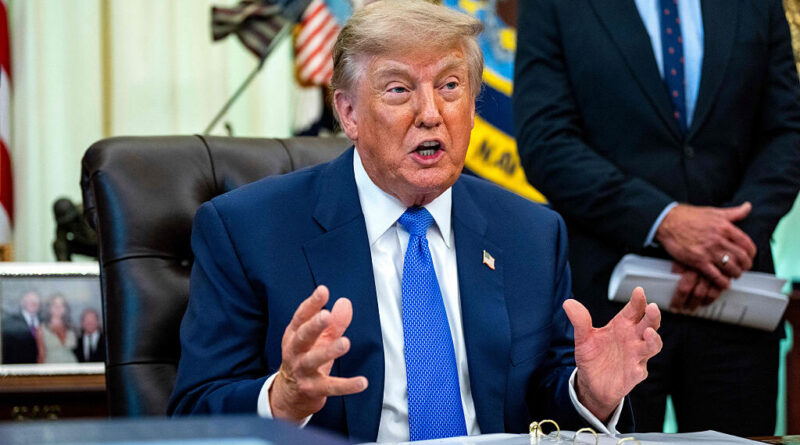
Trump Issues Controversial Executive Order on Vaccines, Sparking Outrage
In a surprising move that has drawn widespread criticism, former President Donald Trump has signed an executive order that seeks to reduce the availability of established vaccines while endorsing unproven alternatives. This decision has raised significant concerns among public health experts and advocates, who argue it could undermine years of scientific progress in vaccination efforts.
During a recent press conference, Trump made alarming statements regarding the measles, mumps, and rubella (MMR) vaccine, labeling it as “quite lethal.” He further perpetuated the long-debunked myth linking vaccines to autism, a claim that has been scientifically disproven multiple times. These assertions have reignited debates about vaccine safety and public health policy in the United States.
The executive order, described by critics as “bonkers,” directs federal agencies to prioritize research and development of alternative vaccines that have not been clinically validated. This shift in focus could lead to the promotion of therapies lacking rigorous testing, potentially endangering patients who rely on established immunizations.
Public health officials have expressed grave concerns over Trump’s comments and the implications of his order. Dr. Anthony Fauci, the director of the National Institute of Allergy and Infectious Diseases, emphasized that the safety and efficacy of vaccines are backed by extensive research and data. “Vaccines are a cornerstone of public health,” Fauci stated. “Any attempt to undermine their credibility could have dire consequences for disease control.”
The timing of this order is particularly troubling, as the country continues to grapple with the aftermath of the COVID-19 pandemic. Vaccination has played a critical role in controlling the spread of the virus, and any move to diminish public trust in vaccines could hinder ongoing efforts to achieve herd immunity.
Health organizations, including the Centers for Disease Control and Prevention (CDC) and the World Health Organization (WHO), have issued statements reiterating the importance of vaccinations in preventing infectious diseases. They argue that the benefits of vaccines far outweigh any potential risks, a sentiment echoed by the majority of the medical community.
Additionally, the executive order has sparked backlash from various corners, including parents of children with autism and health advocates who have long fought against misinformation about vaccines. “We cannot allow false narratives to dictate public health policy,” said Jessica Adams, a parent and activist. “The implications of this order could be catastrophic for our children and future generations.”
In response to the uproar, Trump’s administration has defended the executive order, stating that it aims to foster innovation in the vaccine sector. However, critics argue that it risks prioritizing unverified products over proven vaccines, potentially leading to a public health crisis. The order has also raised questions about the role of politics in scientific policy and the potential for misinformation to influence health decisions.
The fallout from this decision is still unfolding, but public health officials and advocates are gearing up for a renewed effort to combat vaccine misinformation. Campaigns aimed at educating the public about the safety and necessity of vaccines are likely to gain momentum in the wake of Trump’s controversial order.
As the nation faces ongoing health challenges, the importance of evidence-based policy cannot be overstated. Stakeholders from various sectors must come together to ensure that public health decisions are grounded in science rather than political rhetoric. The debate surrounding vaccines is far from over, and the repercussions of this executive order could reverberate for years to come.